What is Social Media Marketing (SMM)?
Social Media Marketing (SMM) is a form of digital marketing that uses social media platforms—such as Instagram, Facebook, LinkedIn, TikTok, X (Twitter), and YouTube—to promote a brand, product, or service.
It involves a mix of:
- Organic content creation: Publishing posts, stories, reels, and videos that inform, entertain, or engage your audience.
- Community management: Responding to comments, messages, and building relationships with customers.
- Paid social advertising: Running targeted paid ads (like Meta Ads or LinkedIn Ads) to reach specific demographics and accelerate lead generation or sales.
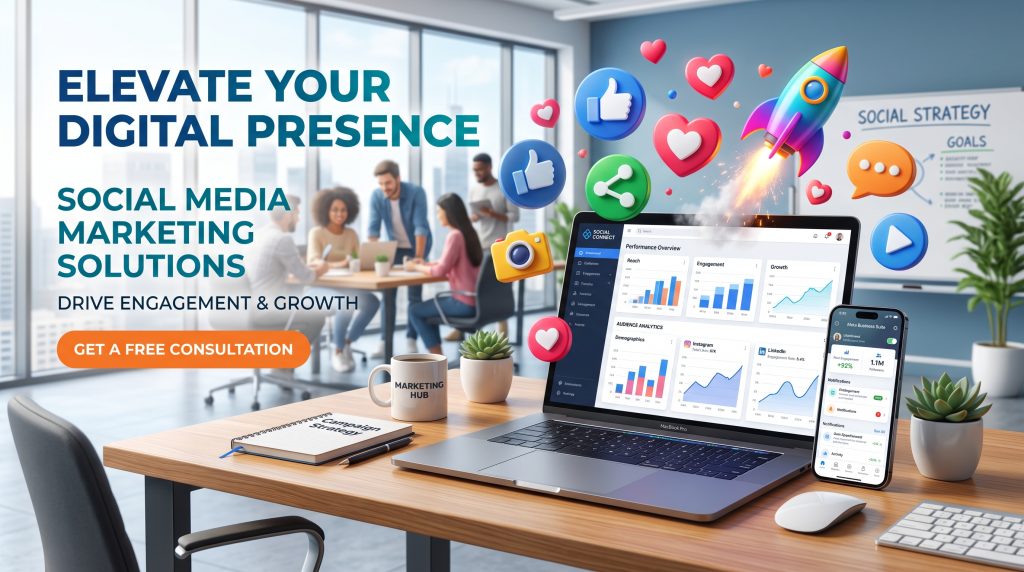
- Analytics & tracking: Measuring engagement, click-through rates (CTR), and conversions to refine performance.
Key Advantages of Social Media Marketing
- Enhanced Brand Awareness & Visibility
- Billions of people use social media daily. Being active on these platforms puts your brand directly where your potential customers spend their free time, increasing recognition and trust.
- Precise Audience Targeting
- Paid social platforms allow hyper-granular targeting based on demographics, geography, interests, online behaviors, job titles, and purchasing intent. This ensures your budget is spent only on high-intent prospects.
- Direct Two-Way Communication & Engagement
- Unlike traditional advertising (billboards, TV), social media allows instant, two-way interaction. Brands can gather real-time customer feedback, answer inquiries, provide support, and build genuine loyalty.
- Cost-Effective Marketing
- Creating a profile and posting organic content is free. Even when utilizing paid campaigns, you have total control over your daily or lifetime budget, making it accessible for small businesses and large enterprises alike.
- Drives Website Traffic & Boosts SEO
- Sharing blog posts, case studies, product pages, and landing pages on social channels directs qualified traffic back to your website. Increased traffic and social signals also positively impact your brand’s overall digital footprint.
- Measurable Results and Real-Time Analytics
- Platforms provide built-in dashboards showing impressions, reach, clicks, engagement rates, and return on ad spend (ROAS). This data allows marketers to A/B test creatives and optimize campaigns in real time.
- Valuable Competitive and Market Insights
- Through social listening, businesses can monitor industry trends, track competitor strategies, and understand what target customers are talking about, helping you adapt quickly to market demands.